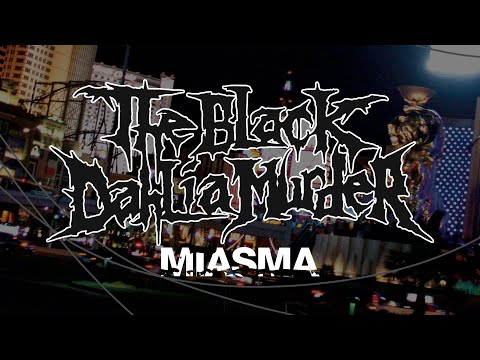
Album: Miasma – Released July 12, 2005.
When Miasma dropped in 2005, it felt like a cold blade to the throat of the American metal scene. The Black Dahlia Murder, still relatively fresh off their 2003 debut, Unhallowed, had already made a name for themselves as torchbearers of the emerging wave of melodic death metal in the U.S., Two decades later, Miasma stands as a pivotal release not just for the band but for the genre at large.
Clocking in at 33 minutes, Miasma wastes no time. It’s a flurry of tremolo-picked riffs, blast beats, and vocalist Trevor Strnad’s now-iconic dual vocal attack, an alternating mix of low-end gutturals and piercing blackened shrieks. At the time, this delivery was still relatively novel within the context of American metal, and it gave Miasma a unique bite that separated it from other styles.
Looking back, what stands out most is how fully formed the band’s sound already was. Tracks like “Statutory Ape” and “A Vulgar Picture” demonstrate a masterful blend of technicality and memorability, two qualities that often don’t coexist this early in a band’s career.
Drummer Zach Gibson’s performance is another highlight. Though his time in the band was brief, his playing on Miasma is explosive and intricate, infusing the album with a manic energy that propels each track forward. Whether it’s a full-on blast or a tightly controlled groove, Gibson’s work gave Miasma a rhythmic backbone that helped the album avoid the pitfall of one-note aggression.
One recurring critique, both then and now, is the album’s relentless tempo. Many of the tracks ride similar BPMs and structures, which can make the album feel like a whirlwind that’s hard to separate into distinct moments. But to fans, that lack of compromise is part of its charm. This wasn’t a band trying to be accessible. This was a band doubling down on brutality, on speed, on technicality, and on their vision.
In the bigger picture, Miasma helped define what The Black Dahlia Murder would become. It marked the beginning of their climb to metal’s upper tiers, showcasing their ambition and sonic identity in sharper detail than their debut. More importantly, it proved that American melodic death metal didn’t have to be a watered-down imitation of the Gothenburg sound. It could be something equally intense but uniquely its own.Twenty years later, Miasma holds its ground. It’s not just a stepping stone to Nocturnal or Ritual. It’s a standout album that captures a moment when The Black Dahlia Murder stopped being promising and started becoming essential. And in the wake of Trevor Strnad’s tragic passing, it’s hard not to hear this album as part of his legacy—feral, furious, and unforgettable.